LuxWave — Emulate. Evaluate. De-risk.
ESA-funded projectOngoing research

MiRAGE

A virtualised satellite ground gateway

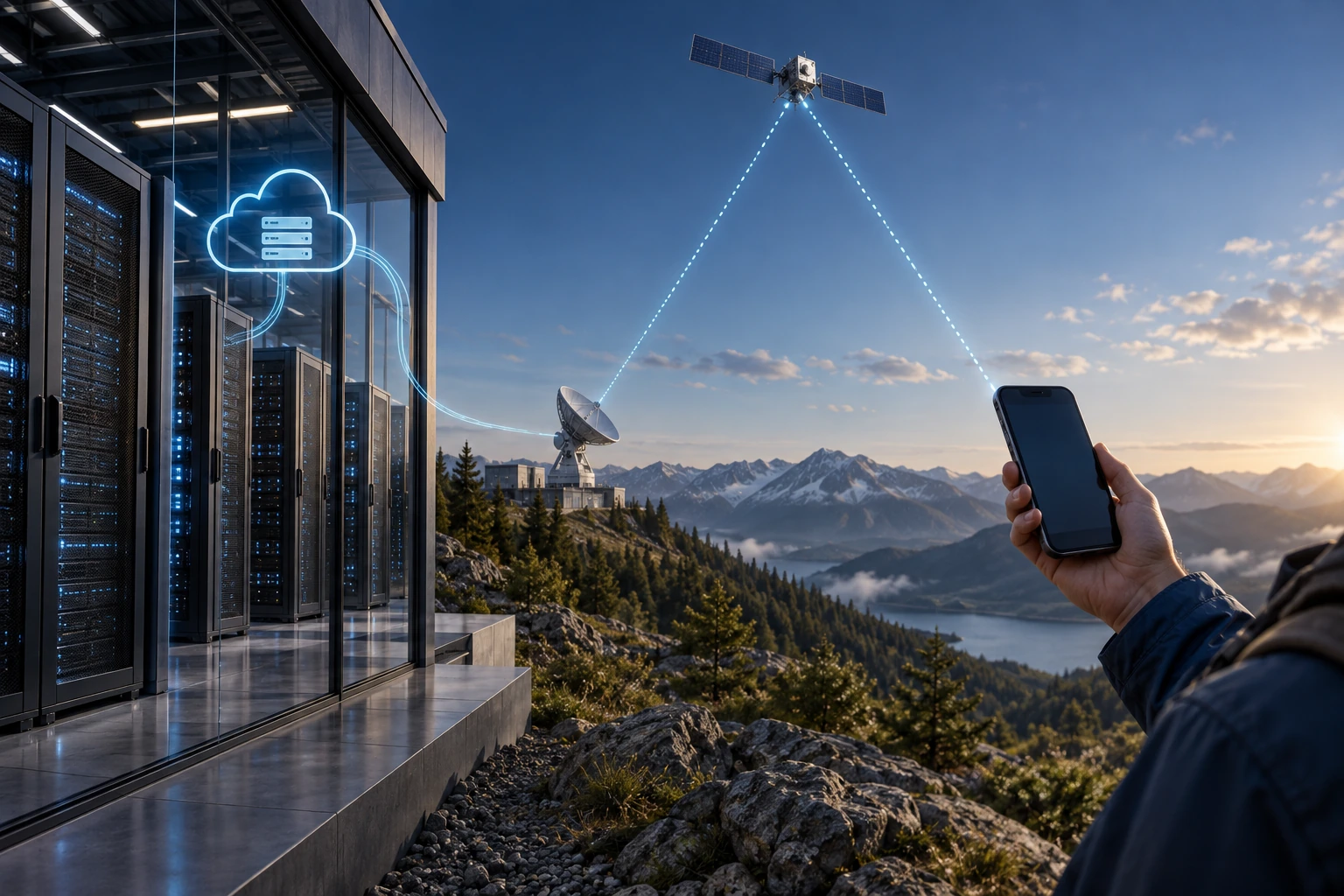
Concept scene of virtualised gateway computing and a handheld device communicating through a satellite, without a separate user-side satellite terminal.
Cloud gateway processing and direct-to-handheld satellite access, shown as a concept.
Project focus

MiRAGE investigates a cloud-native ground gateway for direct-to-handheld 5G satellite services. Selected radio-access and core-network functions run in a virtualised computing architecture. The project examines how that gateway can manage satellite-channel conditions, network-side adaptations and changing service demand.

Testing challenge

What the evaluation
needs to reveal.

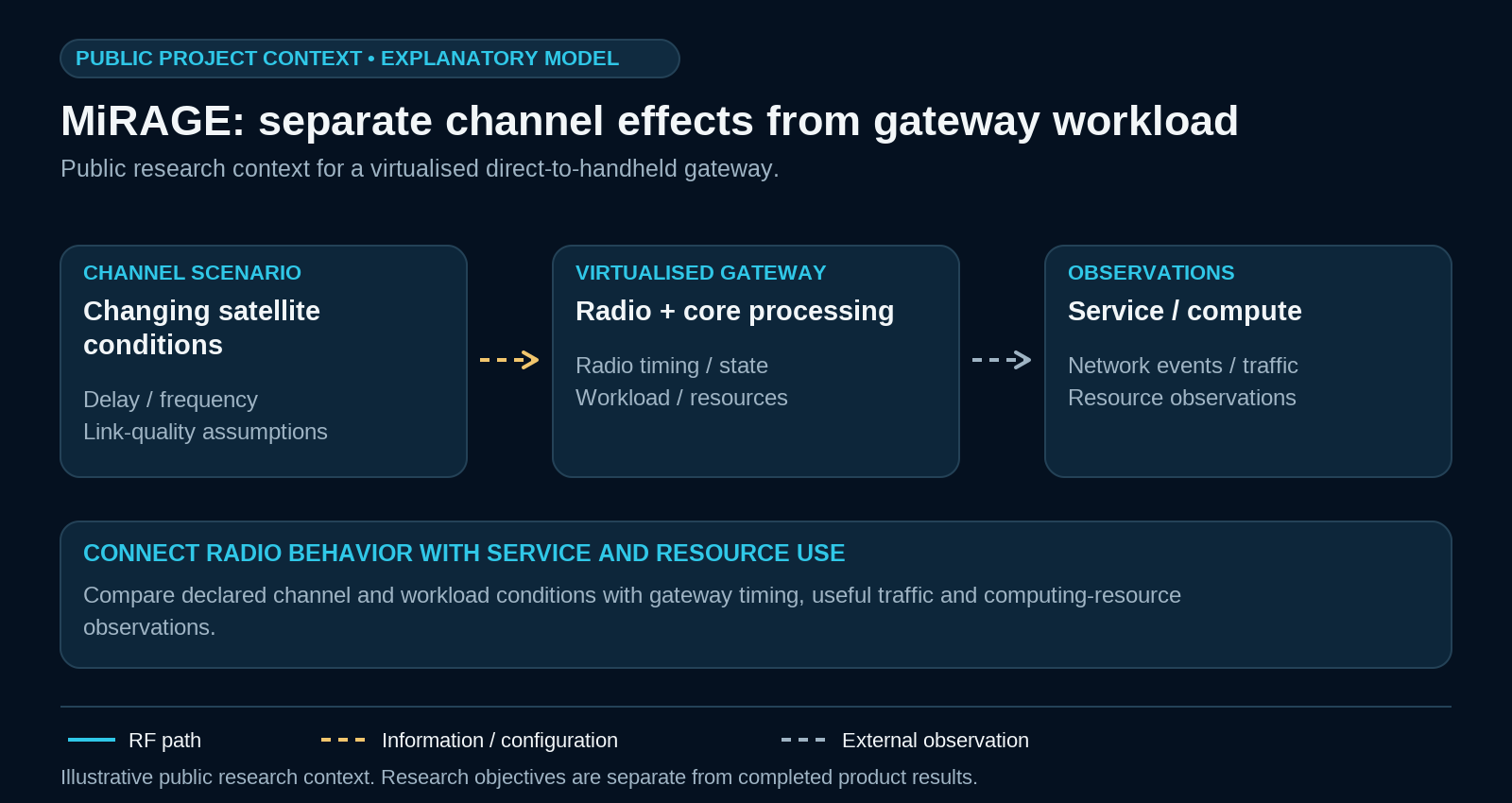
The gateway must distinguish channel-driven behavior from computing and network effects. Delay, frequency offset and changing link quality affect radio processing, while traffic demand changes the workload. A useful evaluation pairs defined channel scenarios with gateway timing, traffic and resource observations.

Evaluation context

Channel conditions around a virtualised gateway.

MiRAGE combines satellite-channel emulation with virtualised 5G radio-access and core-network functions. Defined channel scenarios help investigate gateway behaviour, service continuity and computing-resource demand. Amphinicy Technologies and the University of Luxembourg are identified on ESA's project page as project participants.

Evaluation focusConditions. Observations. Engineering questions.A way to frame the evaluation.
ConditionObservationEngineering question
Scenario-driven delay and frequency variationRadio-processing and synchronisation timingCan the gateway track the intended satellite-channel evolution?
Channel scenario paired with service demandGateway traffic and computing-resource recordsWhich response follows the channel, and which follows the workload?
Network-side adaptation/pre-compensation caseUE synchronisation and service eventsHow should the surrounding network support the intended handheld service?
Research context / A closer look

Separate the radio question from the computing workload.

MiRAGE researches a virtualised gateway for direct-to-handheld satellite services. Channel conditions and service demand create different pressures: the radio processing must handle the intended satellite scenario while the computing platform handles its workload.

An informative gateway experiment therefore distinguishes the satellite-channel case, the network functions and the processing load. Observe the relevant service and compute behavior at the components that supply it, rather than attributing every interruption or processing delay to the RF path.

ESA identifies Amphinicy Technologies and University of Luxembourg as project participants. The public project rationale supports this research-context explanation; it does not establish an accepted deployed gateway or a released implementation of every stated project objective.

Public research-context explanation of satellite-channel conditions and service workload around a virtualised gateway; distinct service and computing observationsExplore the diagram
Explanatory view of the public research rationale, separating satellite-channel conditions from gateway workload and their observations.
Public research context

Research objectives describe what the project aims to investigate. They do not by themselves establish a completed gateway or specify the capabilities of a released product.

Partners and funding

ESA ARTES 4.0 / Space for 5G research, activity 3F.014.

Project roles

Amphinicy Technologies
Project participant
University of Luxembourg / SnT
Project participant
ESA
Programme funding
Project sources

Technical diagram